Easter Island Part 2
April 4, 2014
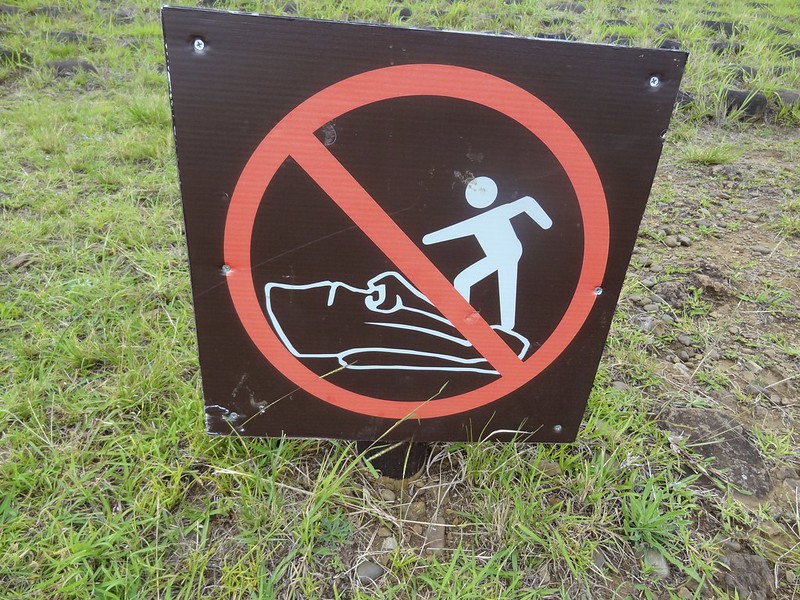
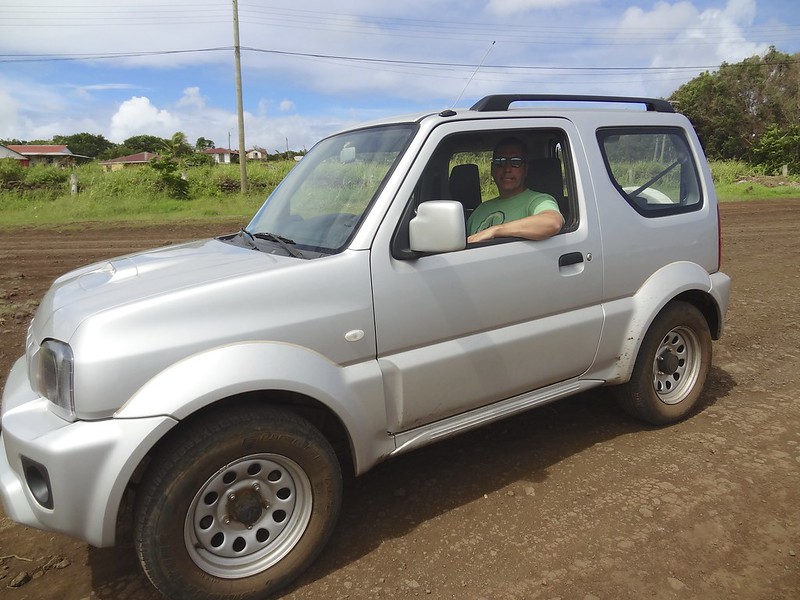
The adventure began when we rented a jeep to tour on our own.
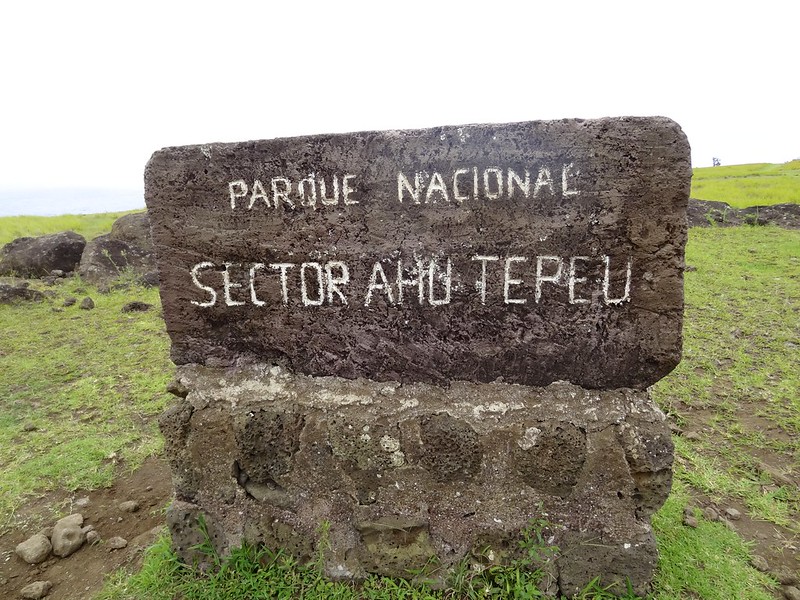
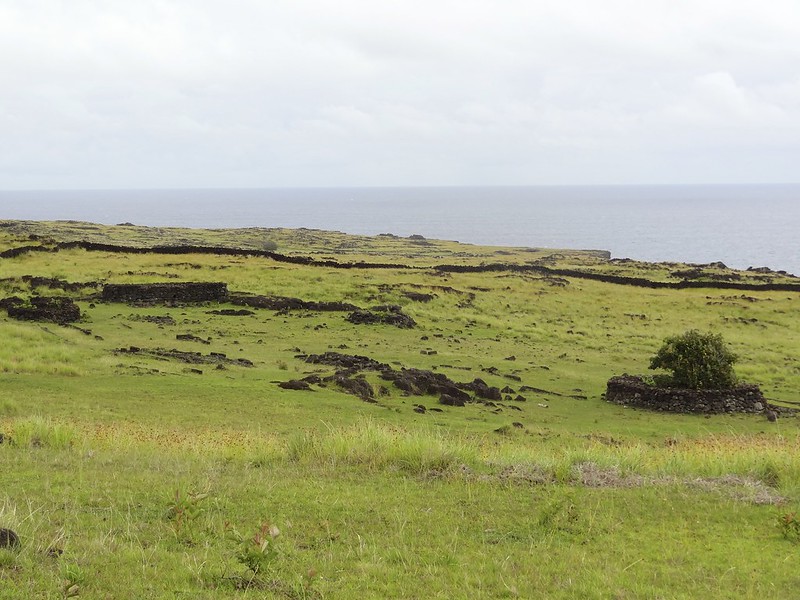
Taking it off road we headed to Ahu Te Peu where there are some platforms and stone carvings.

On the way back we stopped at Ana Te Pahu to explore the cave.


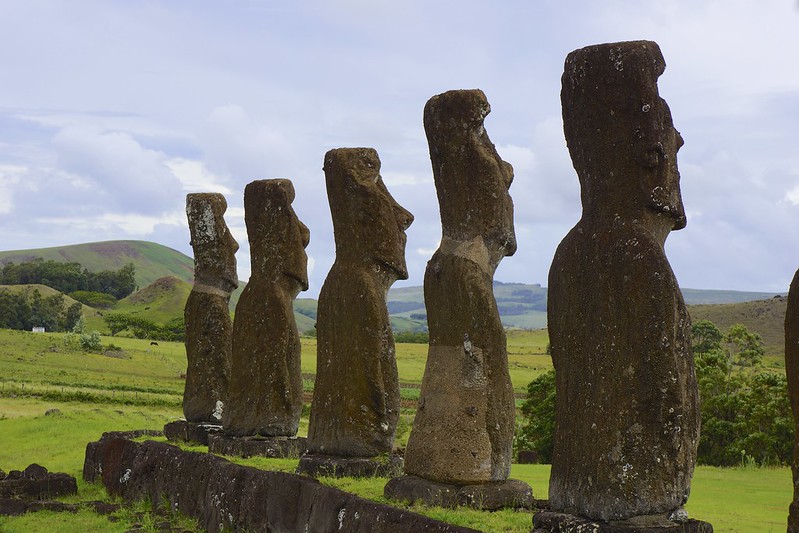
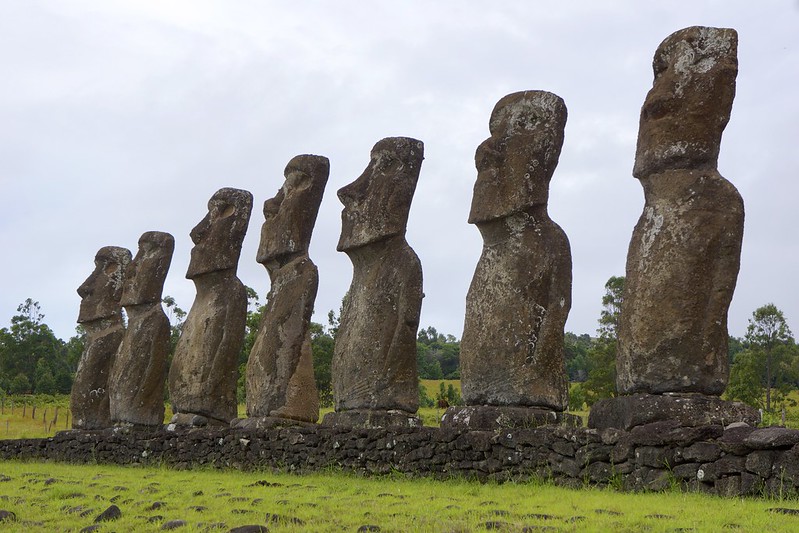
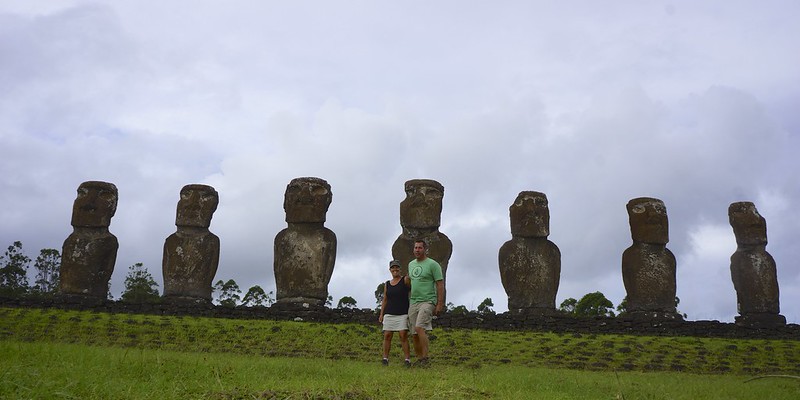
The next stop was at Ahu Akivi to see the 7 standing Moai, which are the only ones on the island that are placed facing the sea.






Next it was off to Puna Pau, which is the quarry in a volcanic crater where the red hats for the Moai were made. This is over 12 km from the first settlement and the crater where the Moai are made.


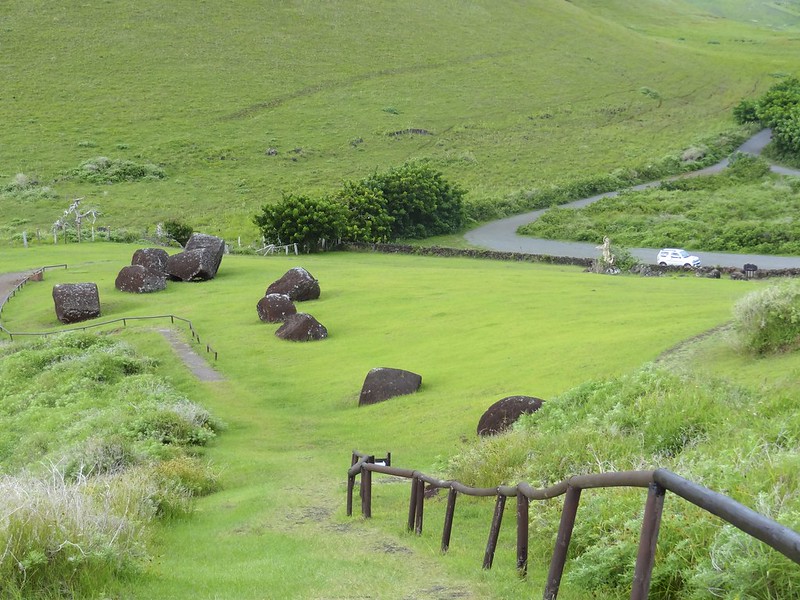
The last stop for the day was again off road, but near town to visit Vinapu, where there are a number of toppled Moai and some hats, as well as the stonewalls.


Today we went back to try and find a Moai Huri A Urenga that was listed on the map, but hard to find. You could see it was not visited much by the tall grass we had to get thru.

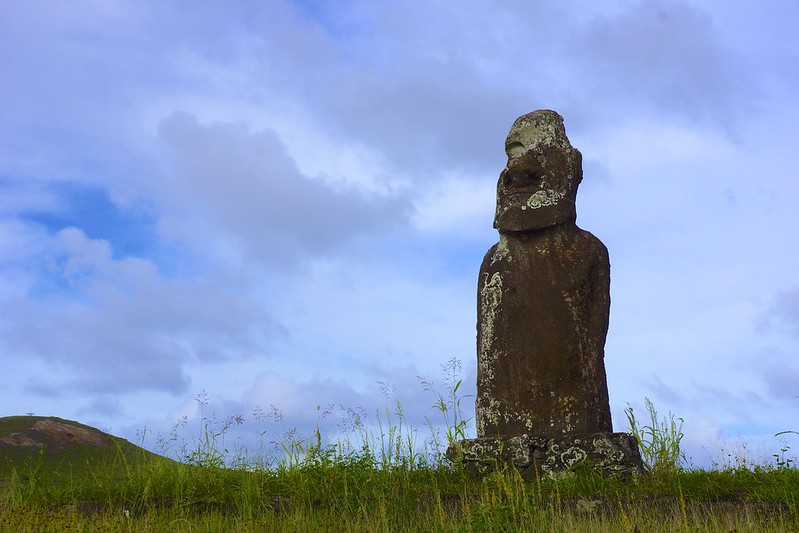


The plan for the day was to drive up the south coast road and stop at all the Ahus, some of which were better than others.

The first was Tarakiu Poukura where there were a few still mostly buried Moai behind barriers.


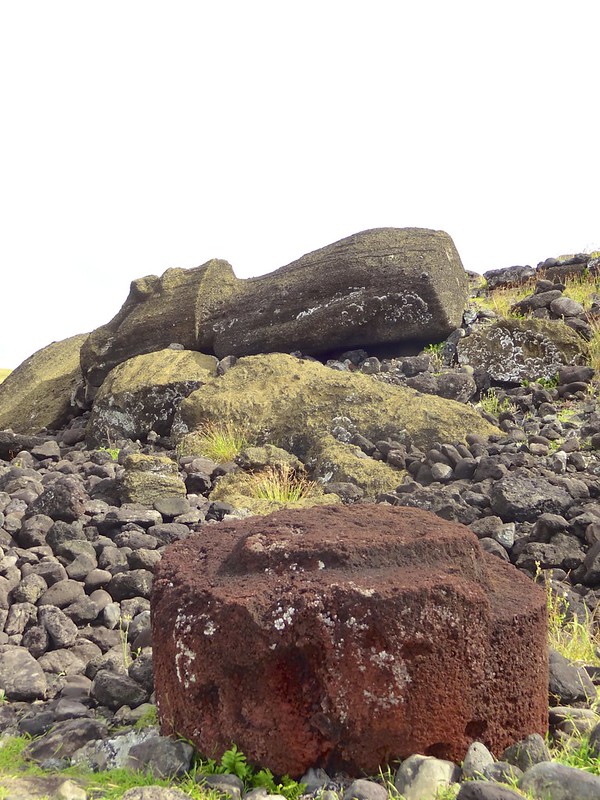
Then we stopped at Hanga Te’e near Vaihu where the Moai had all been pushed over and their hats had all rolled away. Near by there was a small Moai standing in the open so you could get a photo op.


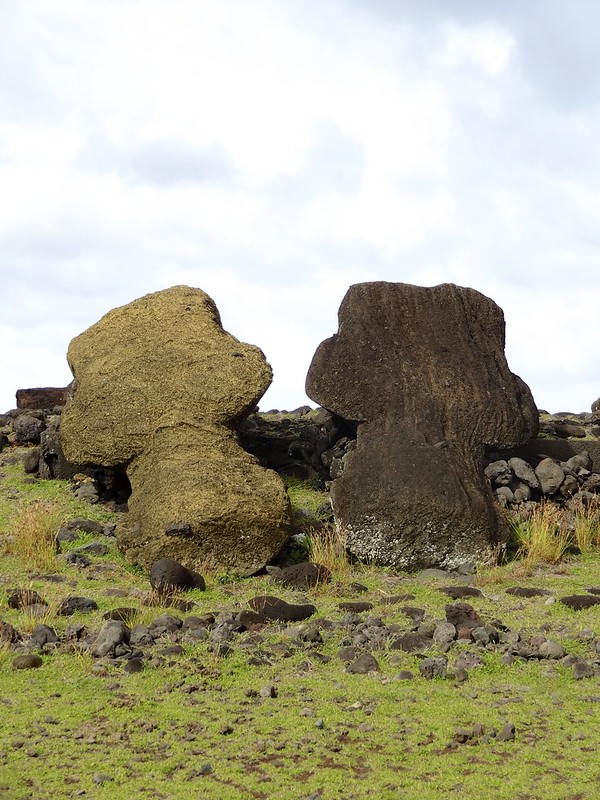

Also near here was a restoration project.


There were two big sites near together first Ura Uranga Te Mahina and then Akahanga both had lots of toppled Moai and their hats, but the second site was bigger as were the Moai.


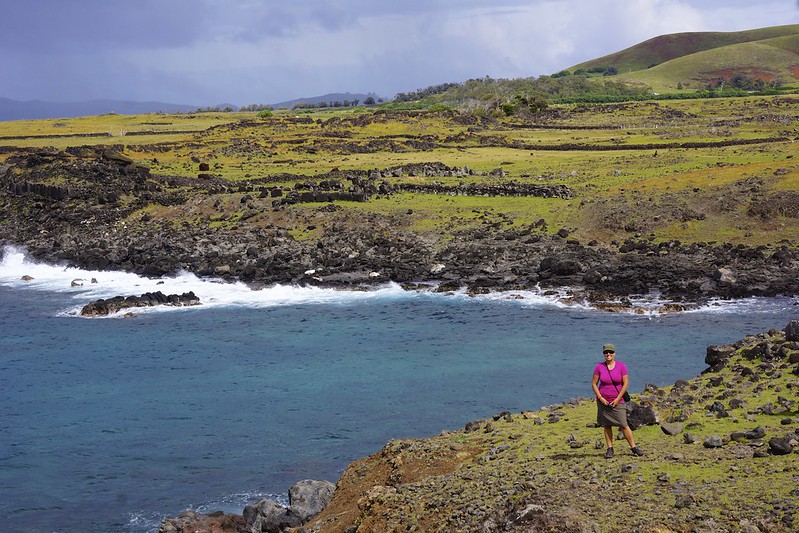




Now for some relaxing for our tired feet.
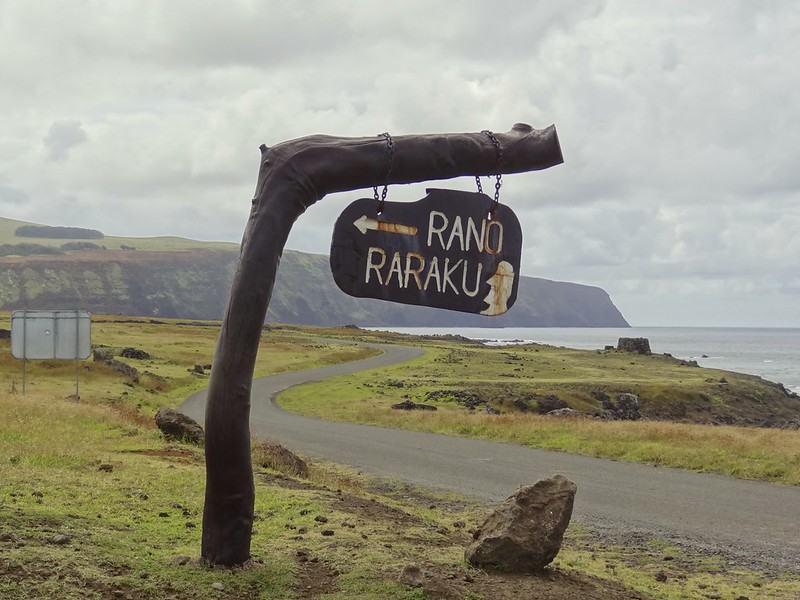
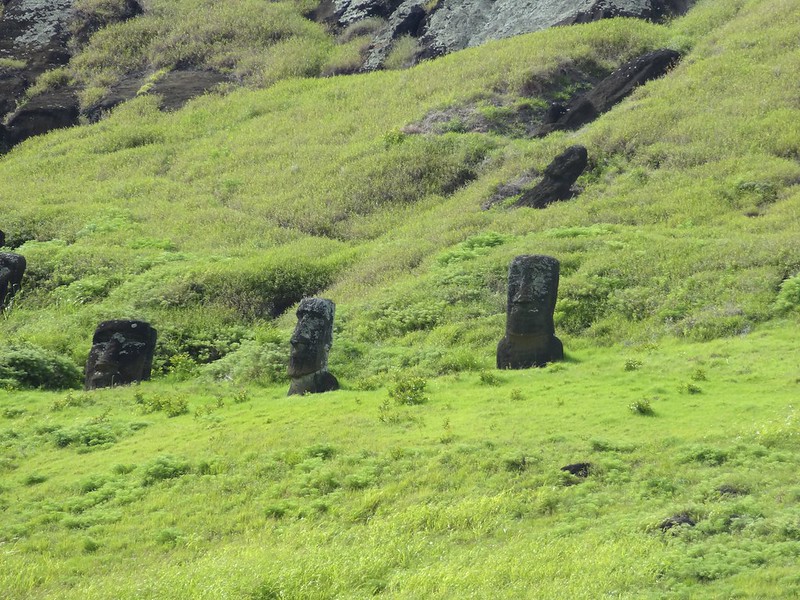
Today we planned two of the most popular spots on the island to visit. First we went to the Moai Quarry in the crater at Rano Raraku where the carved figures are all over the slopes.
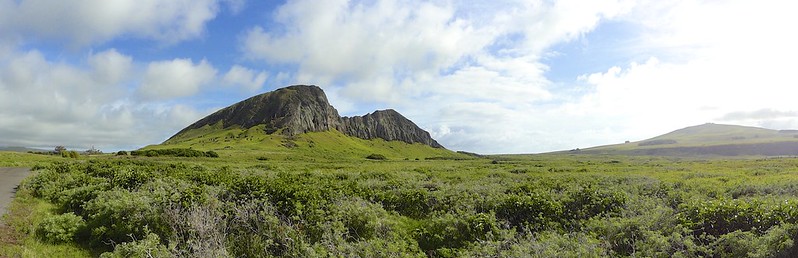
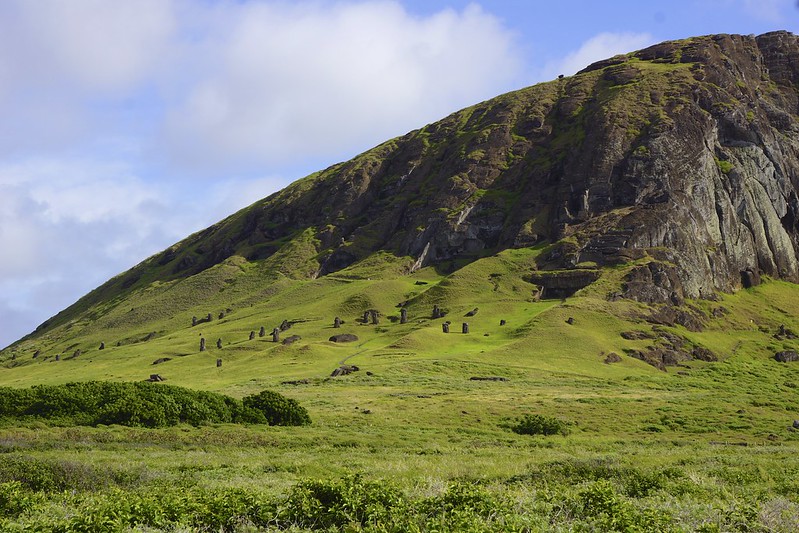
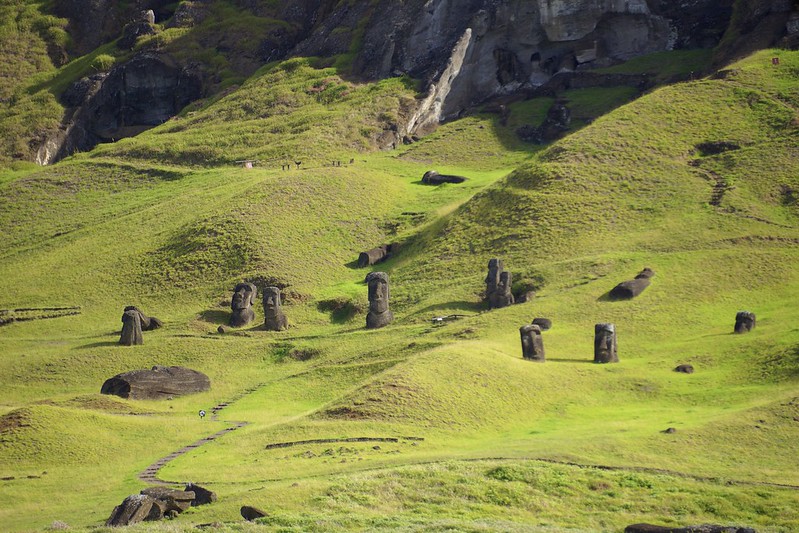


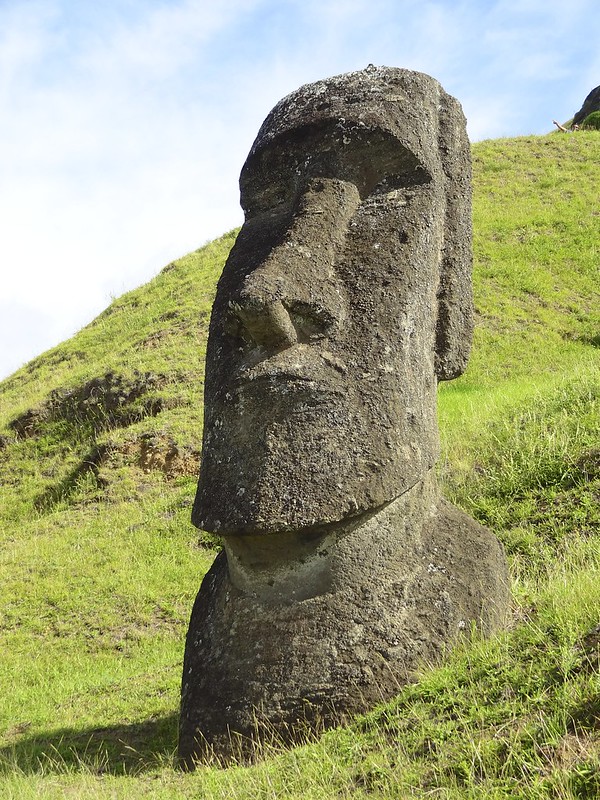
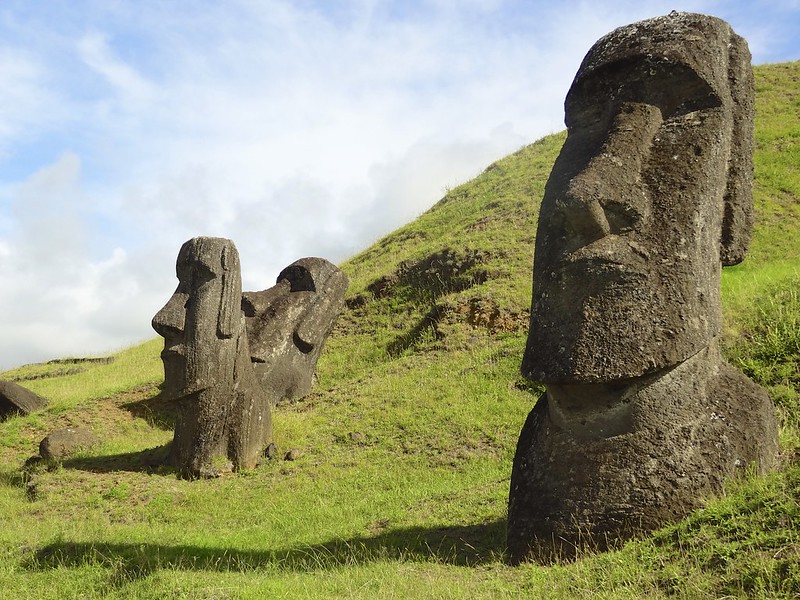


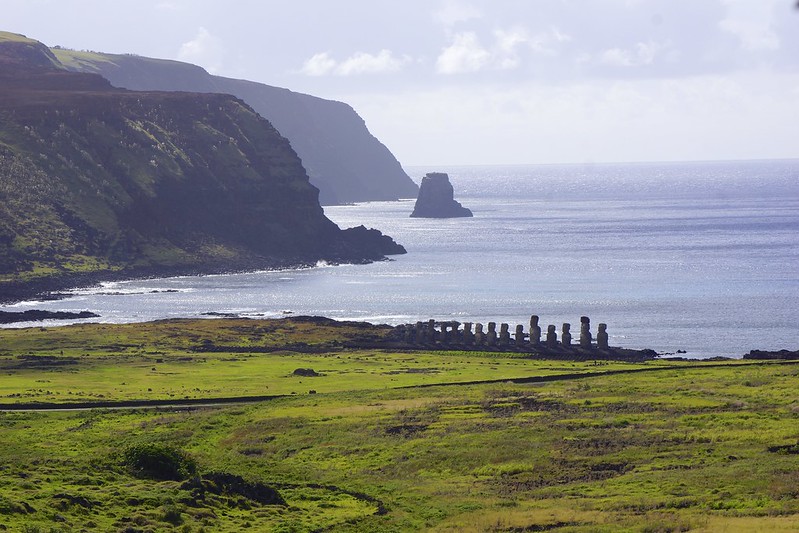
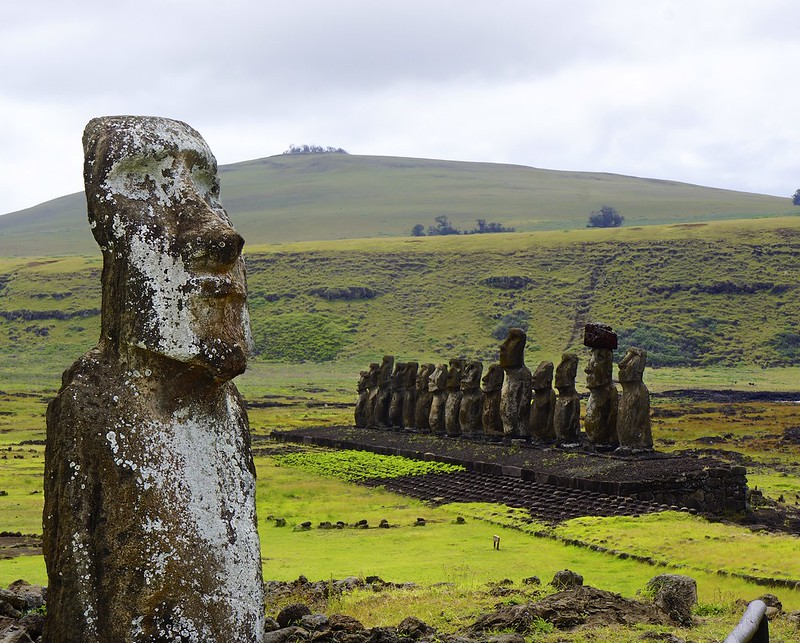
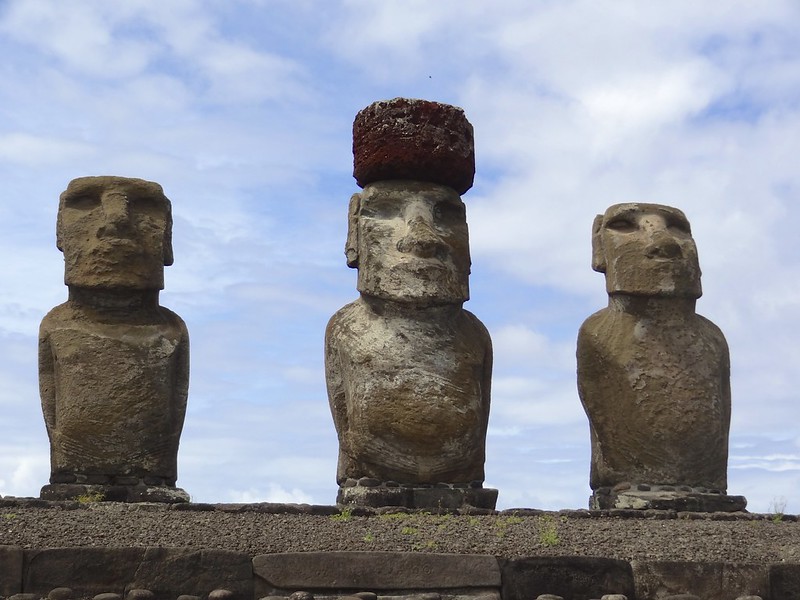
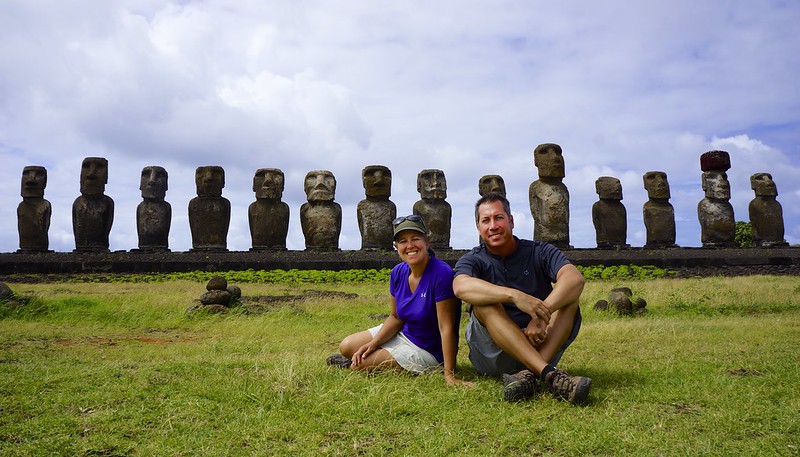
From here you can also see the moai all over the slope and our second stop at Ahu Tongariki where the largest standing Moai are found.
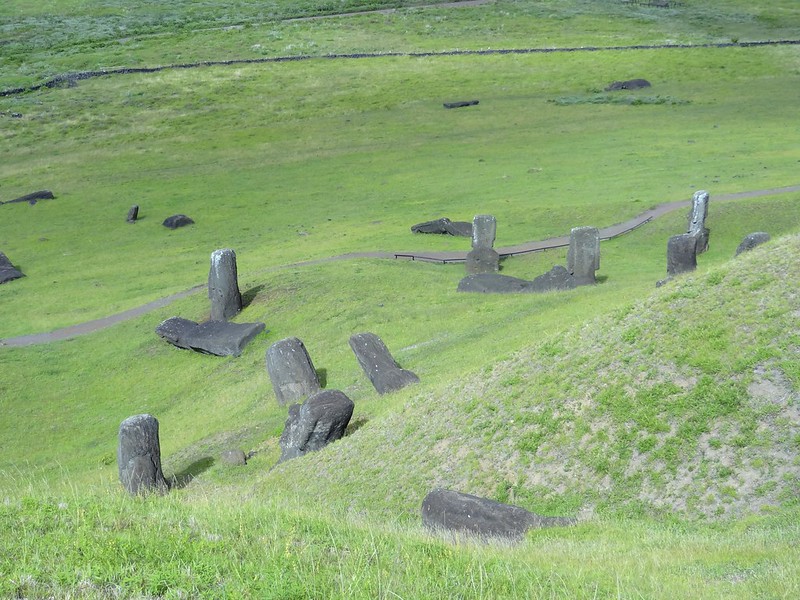

When you climb up you can see partially carved ones, and how the hillside has been carved away.


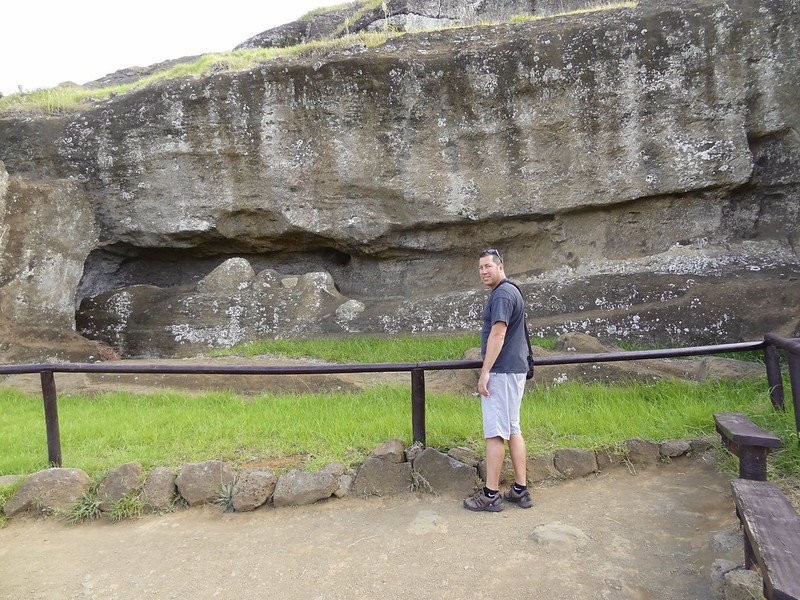
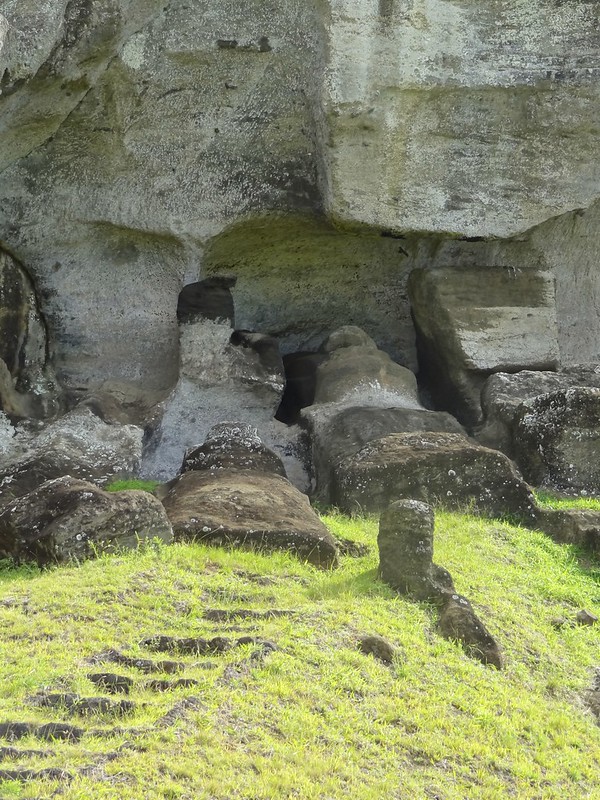
Around the back-side is the only sitting Moai found.
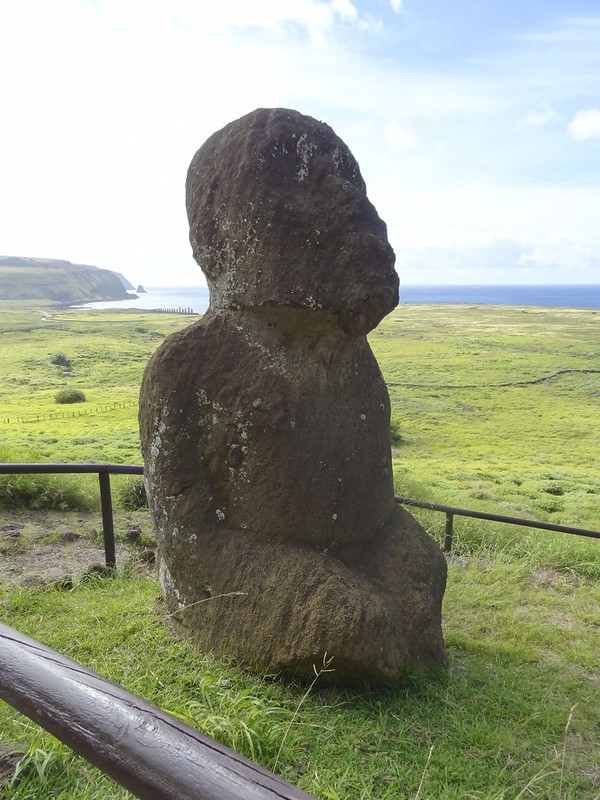
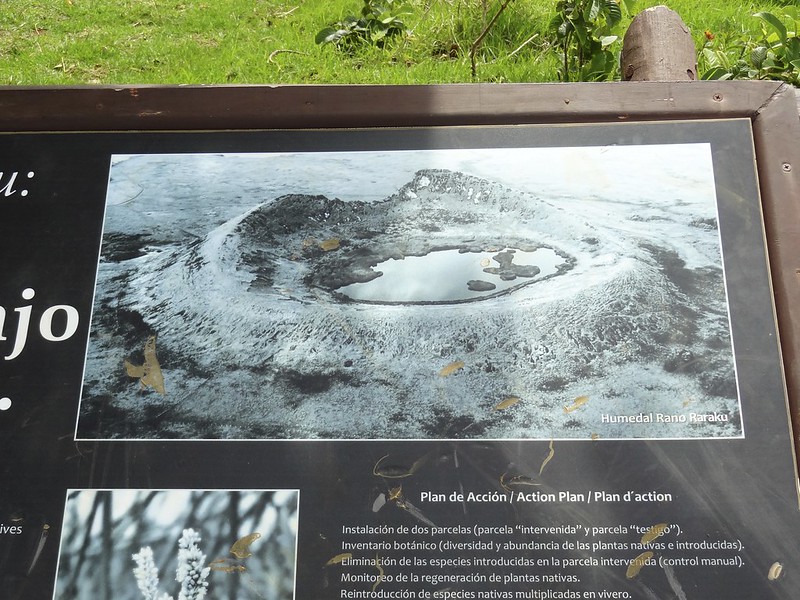
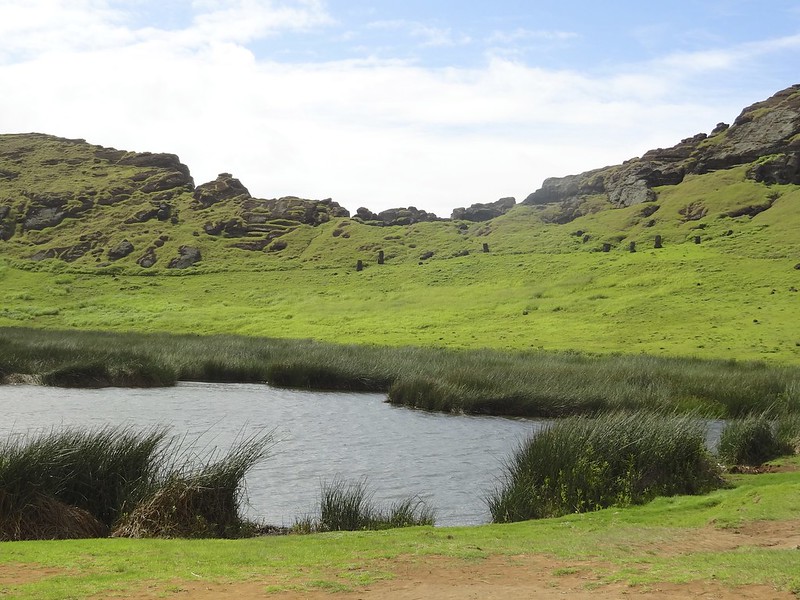
Then you can climb into the crater and see the Moai on the slopes inside the volcano.





It’s a short drive to the Ahu where the Moai had all been toppled long ago and then scattered by a tsunami. The Japanese Heritage society paid for the restoration on the statues.






We continued around off road to the north shore of the island to visit Pu O Hiro a stone you can blow thru and was said to be a talisman for fishing and Papa Vaka where there are a few petroglyphs.


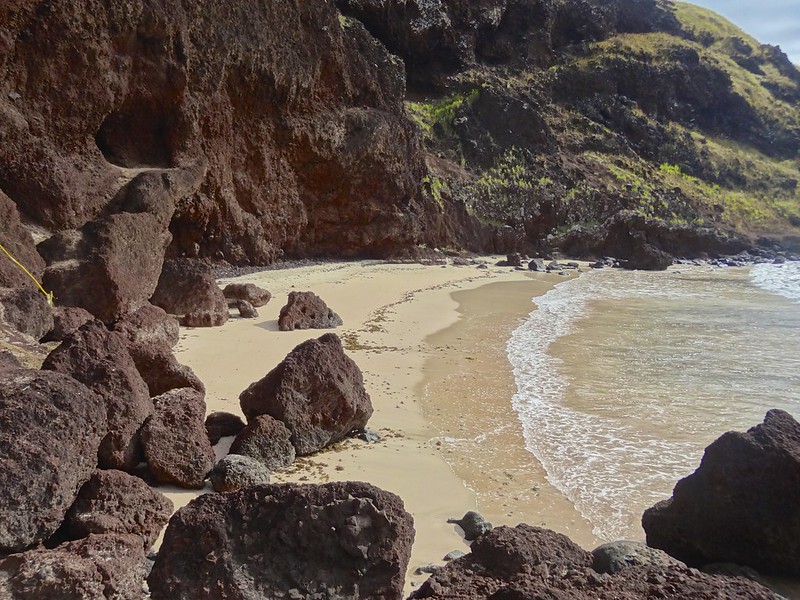
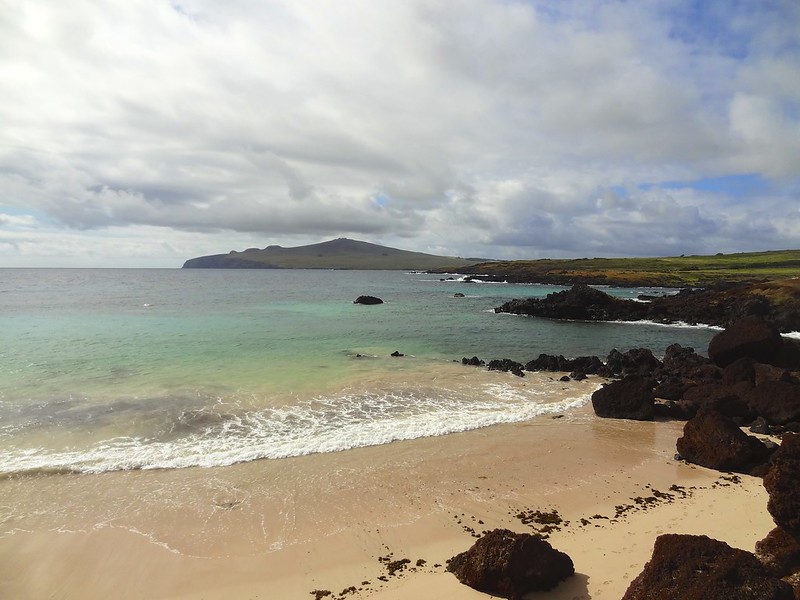
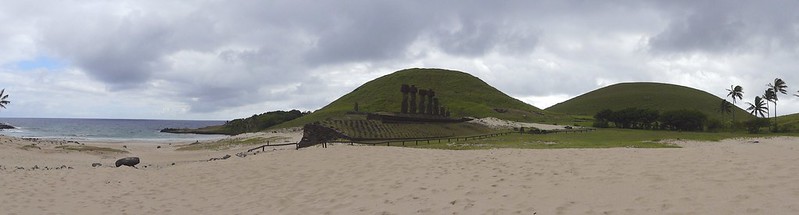
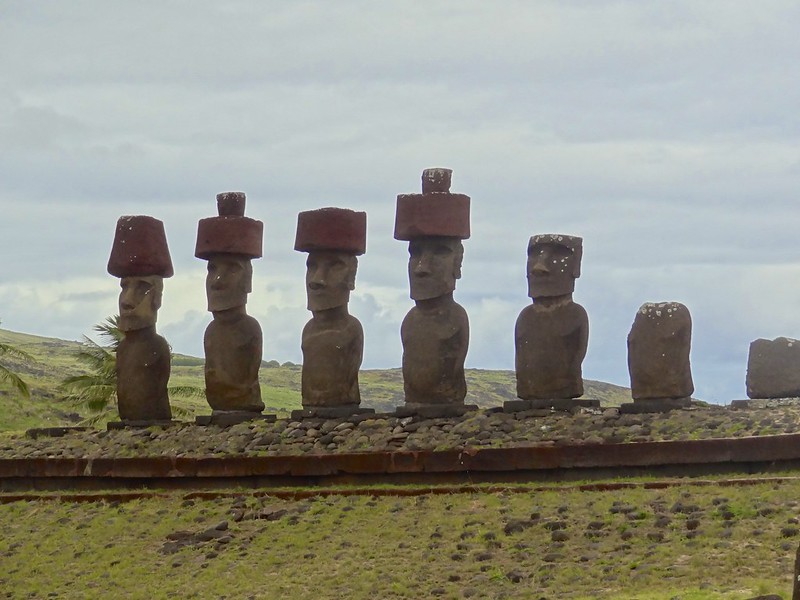
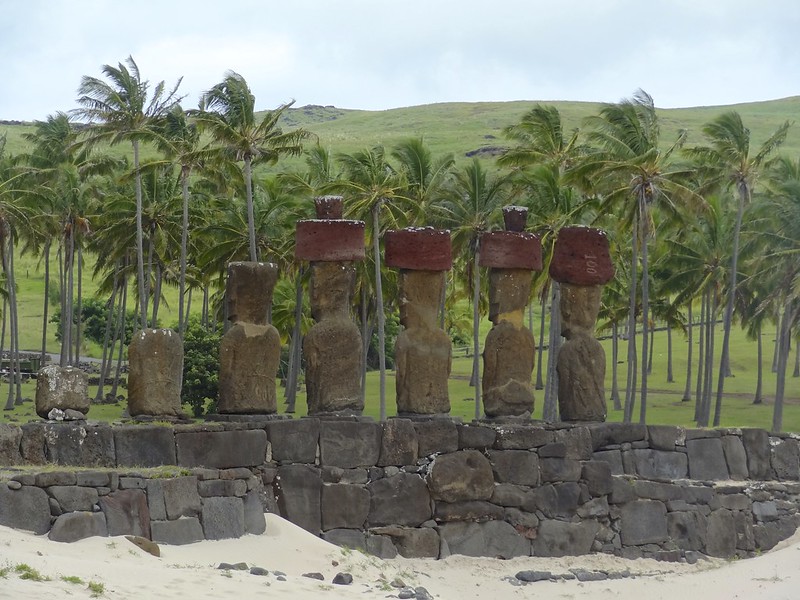
For our last day we went back to the north shore to check out the beaches. The first is the isolated beach at Ovahe surrounded by volcanic rock. Next we headed over to Anakena, which is the site of the first settlement on the island.